Wednesday, March 17, 2010

Happy St. Patrick's Day!

Up until the mid-19th century, most Irish immigrants in America were members of the Protestant middle class. When the Great Potato Famine hit Ireland in 1845, close to a million poor and uneducated Irish Catholics began pouring into America to escape starvation. Despised for their religious beliefs and funny accents by the American Protestant majority, the immigrants had trouble finding even menial jobs. When Irish Americans in the country's cities took to the streets on St. Patrick's Day to celebrate their heritage, newspapers portrayed them in cartoons as drunk, violent monkeys.

However, the Irish soon began to realize that their great numbers endowed them with a political power that had yet to be exploited. They started to organize, and their voting block, known as the "green machine," became an important swing vote for political hopefuls. Suddenly, annual St. Patrick's Day parades became a show of strength for Irish Americans, as well as a must-attend event for a slew of political candidates. In 1948, President Truman attended New York City 's St. Patrick's Day parade, a proud moment for the many Irish whose ancestors had to fight stereotypes and racial prejudice to find acceptance in America.

Today, St. Patrick's Day is celebrated by people of all backgrounds in the United States, Canada and Australia. Although North America is home to the largest productions, St. Patrick's Day has been celebrated in other locations far from Ireland, including Japan, Singapore and Russia.

In modern-day Ireland, St. Patrick's Day has traditionally been a religious occasion. In fact, up until the 1970s, Irish laws mandated that pubs be closed on March 17. Beginning in 1995, however, the Irish government began a national campaign to use St. Patrick's Day as an opportunity to drive tourism and showcase Ireland to the rest of the world. Last year, close to one million people took part in Ireland 's St. Patrick's Festival in Dublin, a multi-day celebration featuring parades, concerts, outdoor theater productions and fireworks shows.

Chicago is famous for a somewhat peculiar annual event: dyeing the Chicago River green. The tradition started in 1962, when city pollution-control workers used dyes to trace illegal sewage discharges and realized that the green dye might provide a unique way to celebrate the holiday. That year, they released 100 pounds of green vegetable dye into the river—enough to keep it green for a week!

Today, in order to minimize environmental damage, only 40 pounds of dye are used, making the river green for only several hours.


information taken from http://www.history.com
photo taken from Flickr.com

Tuesday, March 16, 2010

Sunday, March 14, 2010

Set Your Clocks!

Today is the start of Daylight Saving Time.

Confused as to whether to set your clock an hour forward or an hour back? Use this helpful trick to remember - fall back and spring forward! In the fall we set clocks back an hour and in the spring we set clocks forward an hour.

Why do we have Daylight Saving Time? According to Wikipedia, Daylight saving time was first proposed in 1895 by George Vernon Hudson, a New Zealand entomologist. Many countries have used it since then; details vary by location and change occasionally.

The practice is controversial. Adding daylight to afternoons benefits retailing, sports, and other activities that exploit sunlight after working hours, but causes problems for farming, evening entertainment and other occupations tied to the sun. Traffic fatalities are reduced when there is extra afternoon daylight; its effect on health and crime is less clear. Although an early goal of DST was to reduce evening usage of incandescent lighting, formerly a primary use of electricity, modern heating and cooling usage patterns differ greatly, and research about how DST currently affects energy use is limited and often contradictory.

DST's occasional clock shifts present other challenges. They complicate timekeeping, and can disrupt meetings, travel, billing, recordkeeping, medical devices, heavy equipment, and sleep patterns. Often, software can adjust computer clocks automatically, but this can be limited and error-prone, particularly when DST rules change.

Do you have an opinion about Daylight saving time? Post a message to the blog and share your thoughts!

Saturday, March 13, 2010

Brand New Bluford

We have some nice, new Bluford books in on the series shelves!


Thursday, March 11, 2010

Eclipse trailer

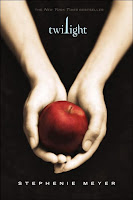
The trailer for the new Twilight saga movie, Eclipse, has been released. What do you think?

Oldies And Goodies

We have some brand new copies of old favorites, so come and check them out while they're still fresh!